The Real Cost of Building It Yourself: AI, Ownership, and Risk
BQ Tech Expert

Over the past year, something has shifted in how organizations approach building tech. AI has made software development not only faster but also more accessible.
Today, “building” doesn’t always mean spinning up a formal engineering project. It can be a set of prompts, a shared content repository, and a workflow that works well enough for a team. In bid and proposal environments, that often translates to generating responses in minutes, reusing prior answers, and reducing dependence on SMEs.
This is, on the whole, a positive change. Teams should be experimenting. There’s real productivity to be gained. But it has also changed the psychology of the decision. When something can be built in an afternoon, the default question becomes: why wouldn’t we just build it?
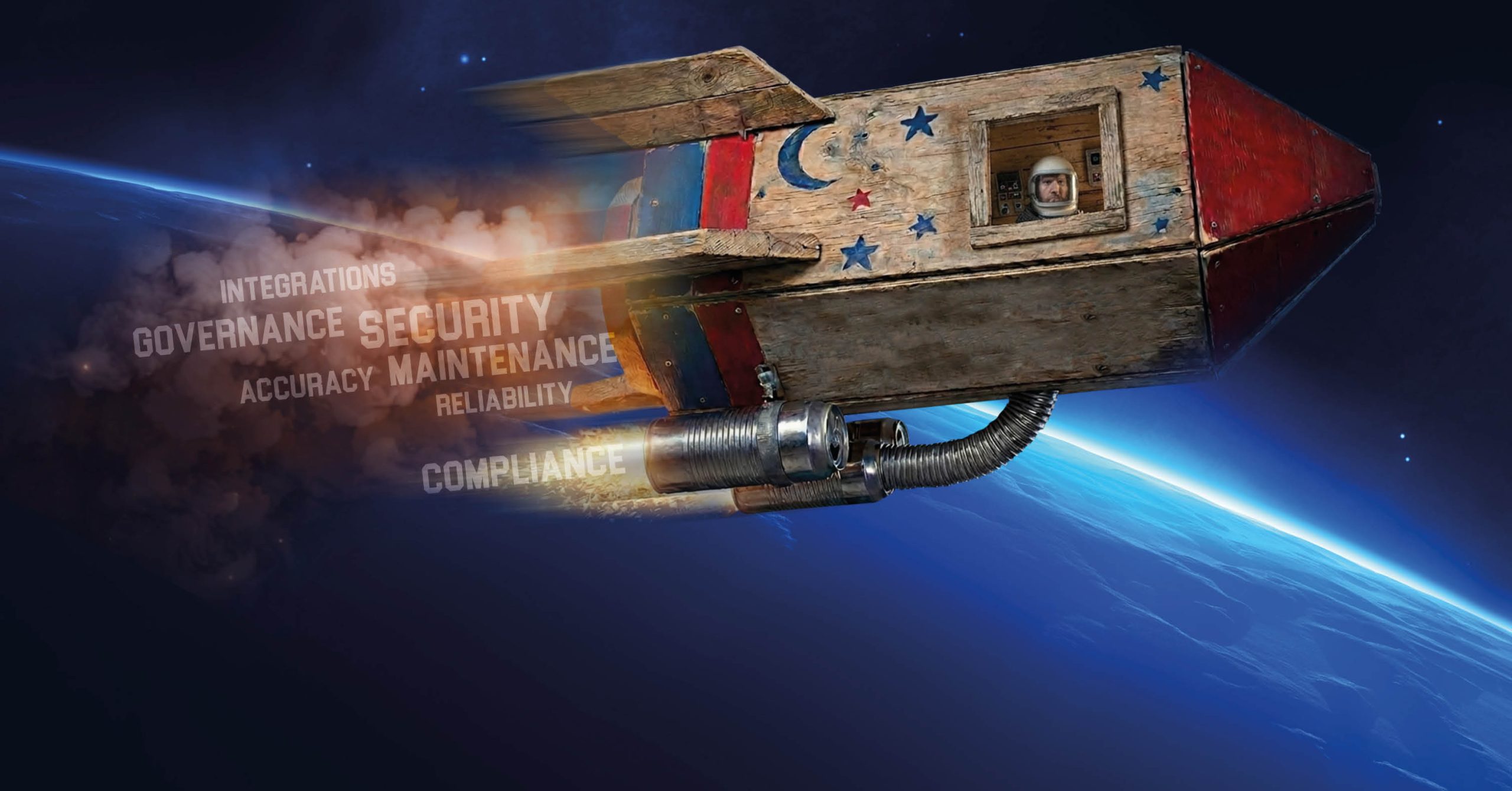
That’s a reasonable question. But experienced engineering leaders know that build cost doesn’t end after the build. Yes, AI has significantly reduced the time and effort required to create something useful. What hasn’t changed is everything that follows, like maintaining integrations, managing access and security, adapting to evolving requirements, and ensuring outputs remain reliable over time.
This becomes very real in proposal work. Generating a draft is now straightforward. The harder question is whether that draft can be trusted: whether it’s accurate, consistent, and relevant.
What makes this particularly challenging is that issues don’t show up immediately. They emerge gradually. An answer that was correct last quarter gets reused without context. Similar questions receive slightly different responses across teams. SMEs are pulled back in to revalidate content “just to be safe.” The volume of review increases, and the time saved in drafting begins to erode.
Without clear ownership – over content, approvals, and context – teams compensate with more human intervention. The process returns to where it started, only with additional complexity layered on top.
This is the difference between executing tasks and operating a function. It is relatively straightforward to accelerate individual steps. It is significantly harder to run the process consistently, govern it, and make it defensible when the stakes are high. And in bid and proposal work, the stakes are always high. Winning requires accuracy, context, and judgment, not just speed.
There is also a human dynamic at play, one that most engineering leaders will recognize in their own teams. Once something has been built, it becomes part of how people work. It feels tailored. There’s a natural inclination to keep investing in it. The most disciplined organizations treat the build decision as time-boxed: define the ownership threshold up front, and revisit honestly when the threshold is crossed.
None of this suggests that teams should not build. There are clear cases where building is the right choice: narrow use cases, small user groups, or internal workflows where risk is low and scope is contained. The challenge is recognizing when the nature of the problem has changed. As soon as the output is external and carries revenue, compliance, or reputational risk, the standard shifts. What matters is no longer whether something works. It’s whether it can be relied on consistently, without revalidation.
The build vs. buy discussion is often framed around capability. In practice, it’s about ownership. For teams looking to make that call more objectively, it helps to apply a simple set of criteria before building starts. I’ve put together a practical scorecard that can help guide that decision.
What are we prepared to maintain, govern, and stand behind? AI has made building more accessible than ever. The question is what you’re prepared to own once you do. And for teams responsible for high-stakes responses, that’s where the real decision lies.